books I read in 2025
Short reflections on the books I read in 2025, in roughly chronological order. Like everything in life, 90% is kind of "meh", so I've highlighted the ones that impacted me the most.
In 2025 I read 22 books — which is basically the same number of books I read in 2023 and 2024. Pretty curious, considering I spent most of the year feeling like I was reading very little! Goes to show you.
If you're curious, my reading habits are more or less described in my post "three tips to read more", published in 2022 :)
previous editions:
>> [books I read in 2020]
>> [books I read in 2021]
>> [books I read in 2022]
>> [books I read in 2023]
>> [books I read in 2024]
Summary
click on titles for easy navigation!
- Rio Before Rio 💖
- 1565: While Brazil Was Being Born
- In the Times of Guanabara: 1960-1975
- There Is No Antimemetics Division ⭐
- You Can Negotiate Anything
- We Have Always Lived In The Castle
- The Hobbit 💖
- A Wizard of Earthsea
- The Coming of Conan the Cimmerian
- A Princess of Mars
- Lord of Light ⭐
- Hyperion
- Ancillary Justice
- Doppelganger ⭐
- The Mezzanine
- Katabasis
- The King of Elfland's Daughter 💖
- Everything Is Tuberculosis
- Frankenstein ⭐
- If Anyone Builds It, Everyone Dies
- The Scaling Era: An Oral History of AI
- Careless People 💖
If there's a book you'd like to recommend to me, please get in touch!! There's a comment section below that doesn't even require registration. Who knows, your recommendation might change my life?
1. Rio Before Rio (Rafael Freitas da Silva, 2024) 💖
Between 2022 and 2023, I had the opportunity to live in Spain during my PhD. I traveled to every city I could, visited dozens of museums, and went on countless guided tours — an enriching experience that made me an expert on Iberian history. It was awesome! And then I came back to Brazil and realized I couldn't explain why Getúlio Vargas had killed himself.
Driven in equal parts by shame and curiosity, I decided I wanted to gradually fill these gigantic gaps in my knowledge about our history. That's when I found "Rio Before Rio".
"Rio Before Rio" tells the story of the founding of the city of Rio de Janeiro (where I live and have lived my whole life) from the perspective of indigenous peoples, trying to reconstruct what their life was like, where they were distributed, how their interactions with the first colonizers went, etc.
The book is very well written, without a doubt. But above all, it's an extremely beautiful book. It's a monument to perfection and care. Absolutely recommended.
4. There Is No Antimemetics Division (qntm, 2020) ⭐
It's funny how some books become perpetually associated in our memory with specific places... I started reading this book while I was in the reception area of a public hospital, waiting to be called for surgery, and I can't separate the experience of reading this book from the experience of being anxious and alone, waiting for time to pass as quickly as possible in a dark and freezing ward.
The synopsis is this: we all know what memes are: ideas that, for some reason, are sticky and spread easily through human minds. But we rarely talk about antimemes — that is, ideas that are particularly slippery, hard to remember, like mathematically dense texts (that repel any attempt at concentration) and dreams (which we forget almost the instant we wake up).
What if those weren't the limits of antimemes? What if there are ideas so antimemetic that they're forgotten almost immediately after we come into contact with them? What if these ideas have been here all along, but nobody noticed?
It's a science fiction book that follows the work of people in the Antimemetics Division of a secret government institution. It's really cool. It gave me exactly what I needed at the moment I needed it.
"Yes," Wheeler says. "Yes. Write this down. It's the first thing you're learning today. Humans can forget anything. It's okay to forget some things, because we are mortal and finite. But some things we have to remember. It's important that we remember. Write to yourself something which will make you remember."
7. The Hobbit (J. R. R. Tolkien, 1937) 💖
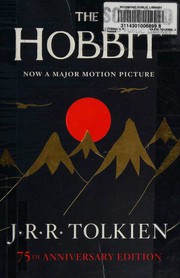
Let's go: I was never a Lord of the Rings fan, despite having tried hard to be (I never got past the middle of the first volume), and my partner had never had any contact with the series, so I don't know exactly why we decided to read The Hobbit together out loud. But, holy crap, the choice was spot on — what a great book to read aloud!!! The dialogues are fun, you can do various different voices, the prose is full of pleasant wordplay ("where are Dwalin Balin Kili Fili Dori Nori Ori Oin Gloin Bifur Bofur Bombur and Thorin...").
Apparently Tolkien wrote the book to read to his son at bedtime, and if that's true, then congratulations to Mr. Tolkien because the book is 100% perfect for that.
We entered with suspicion and left converted. Seriously, the book is very funny. Bilbo is a lazy guy who only thinks about food, Thorin is a treacherous jerk, and Gandalf is a sneaky old man who disappears at the worst moments. Definitely recommended.
11. Lord of Light (Roger Zelazny, 1967) ⭐
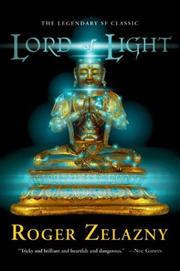
I bought this book at the Book Fair without knowing much about it, largely because the cover was beautiful and because I recognized the name as the author of the book mentioned in a video I'd watched.
The synopsis is this: on a distant planet in the cosmos, lives a human civilization very similar to ours, but kind of magical. For example, people really reincarnate: every time someone is about to die, the person is taken to a sacred room where a priest analyzes the person's life and decides if their karma is adequate. If so, the person's consciousness is transmigrated to a new body, where they can continue living; otherwise, their journey ends there.
As suggested by the word "karma", this whole reincarnation scheme is presented with a very Hindu aesthetic — except... it's real. Not only is reincarnation real, but the Hindu gods are too, as are the demons, the sacred cities, and everything else.
This might sound like a normal fantasy book, à la Percy Jackson or American Gods. Except there's something very strange because we're undeniably on another planet, and — plot twist from the first 5 pages — it's not a fantasy book, but science fiction.
Extremely imaginative, extremely pleasant reading. I would play an RPG in this universe, easily.
14. Doppelganger (Naomi Klein, 2024) ⭐
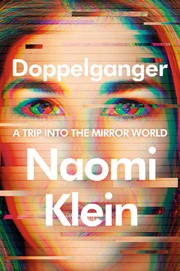
The book is a dissertation (in the broadest sense of the word) about the conspiracy theories, climate denial, and anti-scientism of today. How did we get to this point? What are we becoming? What are the consequences?
Some points that struck me — about how our current society's obsession with "fitness" and "wellness" isn't entirely unrelated to remastered fascism:
"There are deep and healthy pleasures to be found in exercise, as there are in other aspects of wellness. For many of the evangelists in these worlds, however, both fitness and diet are intensely value-laden endeavors. Achieving goals means setting rigorous targets and displaying relentless discipline to meet them. That's how you reach your idealized body double. Which is all fine if it stays there. But the trouble is, it often doesn't."
I really enjoyed it.
17. The King of Elfland's Daughter (Lord Dunsany, 1924) 💖
"The King of Elfland's Daughter" is a fantasy book I discovered through Appendix N of Dolmenwood, an RPG setting released in recent years that quickly became one of my favorites.
At first glance, the book is just a generic story about a man who falls in love with the "princess of the Elves" and faces wild challenges to marry her. Except it's a book from nineteen twenty-four, 13 years before Tolkien published anything about Middle-earth (in fact, this book served as inspiration for Tolkien and other early 20th century fantasy authors), and the author's pen name is LORD DUNSANY.
When you read something ancient and influential like this, the risk is always the same: realizing that (1) you kind of already know the whole story without having ever read it, because so many other people copied its elements, and (2) the story itself isn't that good, and people only liked it at the time because it was the only thing available.
I'm pleased to report: that's not the case here. For a 1924 fantasy book about elves and fairies, "The King of Elfland's Daughter" is incredibly... original? And pleasant to read?? Chapter VII ("The Coming of the Troll"), in particular, was probably the most fun sequence of words I got to pronounce in the year 2025.
Extremely recommended if you like fantasy! We will forever remember the fields we know...
19. Frankenstein: Annotated for Scientists (Mary Shelley, 1818/2017) ⭐
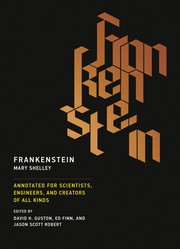
I have several things to comment on about this book. First: I was surprised how 99% of all elements that popular culture associates with "Frankenstein" are different in the book or even completely absent. There's no electricity, no castle, no villagers with pitchforks, no hunchbacked assistant... Most shocking, perhaps, is the fact that The Creature isn't at all stupid — quite the contrary, it's extremely intelligent, managing to learn to speak and discuss philosophy in just a few months, just by listening to others talk (any resemblance to AI is purely coincidental).
Some of my notes while reading:
"It's very easy to empathize with The Creature and curse Victor as an egocentric jerk who brought a child into the world and ran away when it was time to raise it. But if an AI I trained came to me speaking like Shakespeare and killed my 6-year-old brother, would I react differently? No way."
22. Careless People (Sarah Wynn-Williams, 2025) 💖
This brings us to the last book I read in 2025: Careless People, by Sarah Wynn-Williams.
Sarah Wynn-Williams was the global director of public policy at Facebook from 2011 to 2017. The position is a bit abstract but basically she was the person responsible for mediating conversations between Facebook and governments around the world — basically a corporate diplomat. Because of this, she witnessed firsthand how certain decisions were made during the platform's rise, and saw firsthand the philosophy behind the company's upper echelon, which includes Mark Zuckerberg and Joel Kaplan.
In summary: they are all completely detached from reality.
The book doesn't have any big Revelation, in the sense that thanks to Frances Haugen, we already kind of knew that Facebook did all this: collaborate with the genocide in Myanmar, sponsor Trump's election, suppress pages of political agents opposed to the platform... But the book is extremely graphic, allowing us to visualize precisely what the hell they were thinking while committing these atrocities.
"[As vice president of public policy], Joel [Kaplan] starts hiring a political sales team to push politicians—here and abroad—into becoming advertisers. The idea is, if politicians depend on Facebook to win elections, they'll be less likely to do anything that'll harm Facebook."
I already hated Facebook and Mark Zuckerberg before reading this book, but surprisingly, the book managed to make me hate them even more. I recommend reading it for everyone who has a social network, so you can see the kind of thing they're thinking about while they discuss how they're going to collapse our society today.
This is just one side of the story, of course. But considering everything else we know about Zuckerberg and Co., it's probably the correct side.